

Starting Solids: When Feeding Doesn't Go as Expected
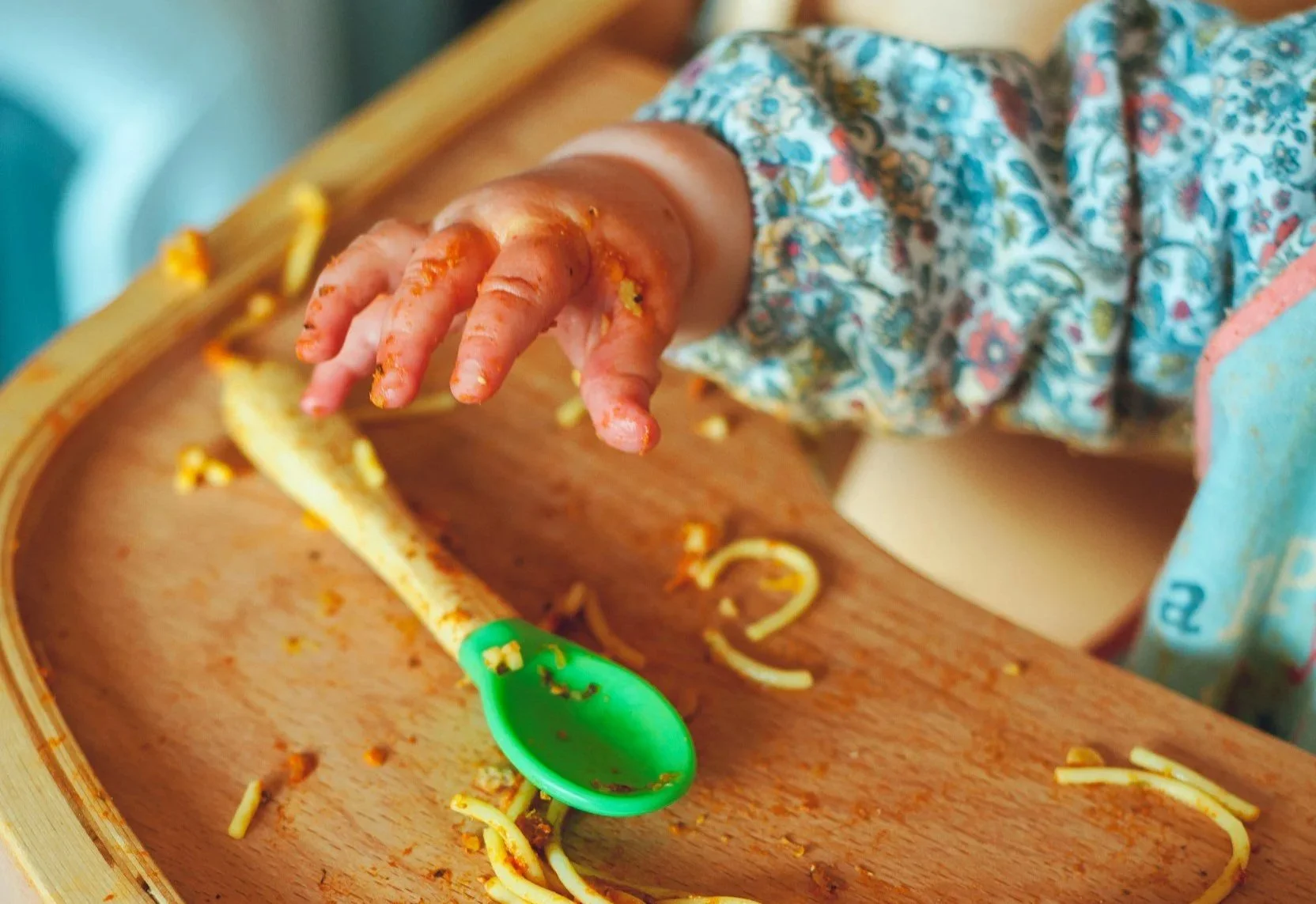
Starting solids is an exciting milestone. You get to watch your baby explore new tastes, touch different foods, make some pretty funny faces, and begin learning a whole new set of skills.
But for some families, this transition doesn't feel quite so exciting.
Maybe your baby happily eats smooth purees but gags whenever you introduce anything with texture. Maybe food seems to fall out of their mouth, or they have a hard time moving it around. Maybe every meal feels like a struggle, and you're starting to wonder whether something is missing.
If this sounds familiar, you're not alone.
Learning to eat is a developmental process, and it involves much more than simply putting food in a baby's mouth. While some babies seem to take to solids fairly easily, others need more time, support, or help developing the skills that make eating comfortable and efficient.
So how do you know what's part of the learning process and when it might be time to take a closer look?
Let's talk about it.
Starting Solids Is About More Than Just Food
We often think of starting solids as introducing new foods and gradually increasing the amount our baby eats.
But there is a lot happening behind the scenes.
Your baby is learning how to:
Accept food from a spoon or bring food to their own mouth.
Close their lips around food and manage what enters their mouth.
Move their tongue to move food around.
Begin developing the jaw movements and coordination needed for chewing.
Manage different textures, tastes, temperatures, and consistencies.
Coordinate eating and swallowing.
Recognize and respond to hunger and fullness cues.
Participate in meals and communicate their preferences.
These skills develop over time and through experience. Babies need opportunities to explore food, learn how it feels in their mouths, and figure out how to manage it.
Around six months is when many babies are ready to begin complementary foods, alongside continued breast milk or infant formula. Readiness involves more than reaching a particular age. Babies should have appropriate head and neck control, be able to sit upright with support, and show developmental signs that they can participate safely in eating.
And here's something important to remember: Being ready to start solids doesn't mean a baby will automatically know how to manage every texture.
Learning to eat is a process. The goal isn't to rush through it but to support the skills your baby is developing along the way.
What Does It Look Like When the Transition to Solids Is Difficult?
There is a wide range of normal when babies begin exploring food. Some are immediately interested in everything on their tray. Others need time to become comfortable with new tastes, textures, and experiences.
But sometimes, parents begin noticing patterns that suggest their baby is having a harder time developing feeding skills.
Here are a few things I encourage parents to pay attention to.
1. Your Baby Struggles to Move Beyond Smooth Purees
Some babies do well with smooth purees but have a much harder time when food becomes thicker, mashed, lumpy, or more textured.
You might notice that your baby gags frequently when textures change, seems unable to manage small, soft pieces of food, or consistently pushes textured foods out of their mouth.
Introducing new textures can take time. However, if your baby continues to struggle as you gradually introduce developmentally appropriate foods, it may be worth looking at how they are moving and managing food in their mouth.
Eating isn't just about accepting a food. Babies also need to learn how to manipulate it.
2. Food Seems to Fall Out of Your Baby's Mouth
Some mess is absolutely expected when babies are learning to eat. Food on their cheeks, chin, bib, and high-chair tray is practically part of the experience!
But what if food consistently falls out of your baby's mouth, even when they seem interested in eating?
You might notice that your baby has difficulty closing their lips around a spoon, frequently loses food from the front of their mouth, or seems to have trouble keeping food inside while chewing.
These patterns can have several explanations, including difficulty coordinating the lips, tongue, and jaw.
When they persist, it can be helpful to look at the oral movements your baby is using during feeding rather than assuming they simply need more practice.
3. Your Baby Seems to Have Difficulty Moving Food Around Their Mouth
As babies begin eating foods with more texture, they need to learn how to move food around their mouths and begin developing the skills needed to chew.
You might notice that your baby keeps food toward the front of their mouth, has difficulty moving it to the sides, or seems to struggle with foods that require more oral movement.
Chewing skills develop gradually, and young babies aren't expected to chew like older children or adults. But persistent difficulty managing developmentally appropriate textures may be a sign that your baby could benefit from additional support.
The goal is to understand what skills your baby is using, what they are still learning, and what might be making feeding harder than it needs to be.
4. Gagging Happens Frequently
Gagging can be part of learning to eat. It is a protective reflex that helps prevent food from moving too far back before a baby is ready to swallow it.
When babies first encounter new textures, they may gag as they learn to manage food in their mouths. This doesn't automatically mean something is wrong.
However, frequent or intense gagging that continues to interfere with eating, makes it difficult to introduce appropriate textures, or causes significant distress deserves a closer look.
It's also important to distinguish gagging from choking. Gagging is often noisy and involves coughing, retching, or tongue movements. Choking can involve an inability to breathe, cry, or cough effectively and is an emergency.
If your baby is coughing or choking repeatedly during meals, has wet or gurgly breathing during or after eating, or has other signs of possible swallowing difficulty, contact your baby's medical provider.
5. Mealtimes Consistently Feel Stressful
Sometimes the concern isn't one specific feeding skill. It's the overall experience.
Your baby may turn away from food, become distressed when you bring out the spoon, refuse most opportunities to explore new textures, or become upset before the meal has really begun.
There can be many reasons for these responses. A baby may be uncomfortable, have difficulty managing the food being offered, have had challenging feeding experiences, or need more time and support to feel comfortable with eating.
It can be tempting to respond by trying more foods, offering more bites, or encouraging your baby to keep going. But when feeding consistently feels difficult, adding more pressure isn't necessarily the answer.
Instead, it helps to understand what might be making the experience hard for your baby.
What About Gagging, Spitting Food Out, or Refusing a Bite?
These are some of the things parents worry about most when starting solids, and it's helpful to look at the bigger picture.
Spitting food out: Babies may spit food out because they are exploring a new taste or texture, have taken more than they can comfortably manage, or are still learning how to move food around their mouths. Persistent difficulty managing food deserves a closer look.
Gagging: Occasional gagging can be part of learning to eat. Frequent gagging that interferes with feeding or makes it difficult to progress with textures may warrant an evaluation.
Turning away or refusing a bite: Babies communicate through their bodies long before they have words. Turning away, closing their mouths, or pushing food away can be a way of saying they need a break or are finished. These cues should be respected rather than overridden.
Eating very little: In the early stages, babies may consume small amounts of solid food while continuing to receive most of their nutrition from breast milk or infant formula. However, persistent difficulty taking food, concerns about hydration or intake, or poor weight gain should be discussed with their medical provider.
One difficult meal doesn't tell us much on its own. What matters is the pattern over time, the skills your baby is demonstrating, and whether feeding is progressing.
How Can You Support Your Baby as They Learn to Eat?
You don't need to turn every meal into a lesson or make your baby try a certain number of bites.
Some of the most helpful things you can do are also the simplest.
Give your baby opportunities to explore. Touching, smelling, squishing, licking, and tasting are all ways babies become familiar with food. Exploration doesn't always mean swallowing, and that is okay.
Offer developmentally appropriate textures. As your baby develops the skills and readiness for different foods, gradually offer appropriate opportunities to explore a range of textures. Foods should be prepared in ways that reduce choking risk, and babies should always be seated upright and closely supervised while eating.
Follow your baby's cues. Notice when your baby is interested, when they need a break, and when they have had enough. Responsive feeding helps keep mealtimes focused on learning and connection rather than pressure.
Allow time for learning. Babies don't need to master every new skill immediately. Repeated, comfortable opportunities to explore food can help them become more familiar with new experiences.
Pay attention to what is difficult. Is your baby struggling with every texture or only certain ones? Do they have difficulty moving food around their mouth? Are meals becoming increasingly stressful? These observations can help you decide whether additional support would be useful.
And remember, if feeding isn't progressing as expected, you don't have to figure it all out on your own.
When Should You Consider an Infant Feeding Evaluation?
You don't need to wait until your baby refuses almost everything or has a significant feeding problem before asking questions.
An infant feeding evaluation may be helpful when you notice:
Persistent difficulty progressing from smooth purees to developmentally appropriate textures.
Difficulty moving or managing food in the mouth.
Frequent gagging that interferes with eating.
Persistent difficulty accepting or managing foods despite repeated opportunities.
Meals that are consistently stressful or unusually prolonged.
Concerns about how much your baby is eating or whether they are gaining weight appropriately.
A history of feeding difficulties that continues as your baby transitions to solids.
An evaluation doesn't automatically mean your baby needs ongoing therapy. Sometimes, it helps clarify what is typical for your baby's stage of development and gives you ideas for supporting the next steps. Other times, it identifies skills that would benefit from more individualized support.
If there are concerns about growth, nutrition, or possible swallowing difficulties, collaboration with your baby's pediatrician and other medical providers is an important part of the process.
Looking at the Whole Feeding Picture
At Tiny Talk Trio, we look beyond whether a baby accepts a particular food. We want to understand how feeding is going as a whole.
How does your baby move their tongue, lips, and jaw? How are they managing different textures? What happens when food enters their mouth? Are they comfortable and able to participate in meals? Is there a history of breastfeeding or bottle-feeding difficulty that might provide useful information? How is your baby sitting in their high chair?
These details help us understand what your baby is doing well, what they are still learning, and where they may need additional support.
Feeding development doesn't happen in isolation. Oral skills, coordination, sensory experiences, positioning, medical history, and a baby's overall development can all contribute to their feeding experience.
The goal isn't to find a problem where there isn't one. It's to understand your baby and help make feeding a more comfortable, successful experience.
You Don't Have to Wait Until Feeding Becomes a Struggle
Starting solids is a learning process for babies and parents alike. There will be messes, funny faces, foods that are enthusiastically accepted, and foods that are immediately rejected.
Not every gag, refusal, or messy meal is a reason to worry.
But if your baby consistently struggles with textures, seems to have difficulty managing food, or isn't progressing with feeding skills as expected, it's okay to ask for help.
You know your baby best. If something doesn't feel quite right, you don't have to wait until you're certain there is a problem.
At Tiny Talk Trio, we work with infants and families to better understand feeding challenges, support developing oral skills, and help parents feel more confident about what their baby needs.
If you're in Bozeman or the surrounding area and have questions about your baby's transition to solids, we'd be happy to help you determine whether an infant feeding evaluation may be appropriate.
Because sometimes, a little extra support can make a meaningful difference in how a baby learns to eat.
A note for parents: This article is for educational purposes and does not replace individualized medical or feeding advice. If your baby has persistent coughing or choking with meals, breathing changes, poor weight gain, or other concerns about swallowing or nutrition, contact your baby's medical provider.
Additional resources
American Speech-Language-Hearing Association (ASHA): Pediatric Feeding and Swallowing
Centers for Disease Control and Prevention (CDC): When, What, and How to Introduce Solid Foods